
20-mil • High-Performance
Drago Wrap Vapor Intrusion Barrier
- Engineered barrier against VOCs & moisture vapor
- Multi-layer polyolefin film; low permeance
- Life of the Building™ Warranty

Drago Wrap Soil Gas Barriers and Retarders provide reliable protection against harmful soil gases like VOCs, methane, radon, and moisture vapor—helping to safeguard indoor air quality and support long-term building performance.
Engineered with game-changing resin technology and multi-layer polyolefin film, Drago Wrap delivers exceptional durability, low permeance, and easy installation beneath concrete slabs in commercial, residential, and industrial applications.
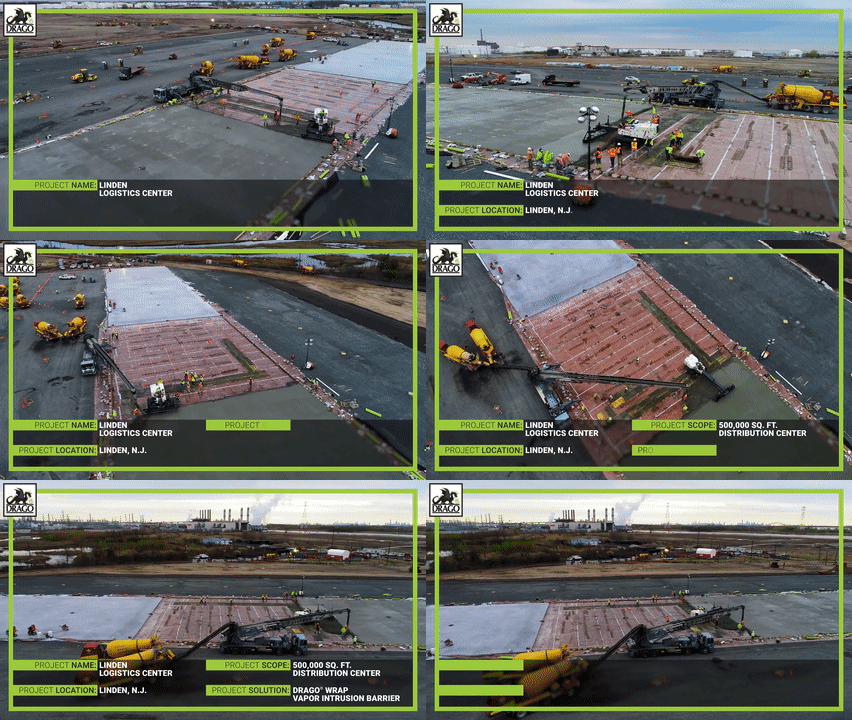
Discover how Drago Wrap Vapor Intrusion Barrier provided key performance, availability, and installation support for a 500,000 sq ft logistics center in Linden, New Jersey. This real-world project showcases Drago’s proven defense against VOCs, methane, and moisture vapor— helping deliver a safer, healthier built environment.
Learn how our team collaborated with contractors and environmental consultants to meet vapor intrusion mitigation goals with confidence and efficiency.
▶ Click the video to watch the 1:30 project profile
Choose the right level of below-slab protection against VOCs, methane, radon, and moisture vapor, then finish the installation with system-matched accessories.


Answers to common questions about vapor intrusion barriers, contaminants,
system design, product selection, and Drago Wrap installation.
A vapor intrusion barrier is a specialized membrane installed beneath a building to create a continuous, monolithic barrier between the occupied structure and the underlying soil. Depending on the membrane selected, it can help provide protection against moisture vapor, radon, methane, volatile organic compounds (VOCs), and other compounds of concern that may migrate from contaminated soil, soil gas, or groundwater toward the building.
Drago Wrap membranes can be selected for vapor intrusion applications involving radon, methane, trichloroethylene (TCE), perchloroethylene/tetrachloroethene (PCE), benzene, naphthalene, petroleum hydrocarbons, chlorinated volatile organic compounds (VOCs), and other volatile compounds of concern. Appropriate membrane selection should consider the specific contaminants and concentrations present, available chemical-specific permeation data, building use, site conditions, and applicable regulatory requirements.
A conventional underslab moisture vapor barrier is primarily designed to help control water vapor transmission from the ground into a building. Vapor intrusion barriers incorporate additional membrane chemistry and barrier technologies, such as HDPE, EVOH, and metalized layers, designed to significantly restrict the sorption and subsequent diffusion of specific soil gases and volatile compounds through the membrane. Vapor intrusion membrane selection therefore requires evaluation of chemical-specific permeation performance in addition to traditional moisture vapor, durability, and installation performance.
A vapor intrusion mitigation system may be required or recommended when soil, soil gas, or groundwater contamination creates the potential for vapors to migrate into a building. The need for mitigation depends on factors including contaminants and concentrations, building use, exposure pathways, site conditions, regulatory requirements, and the recommendations of the project's environmental professional. ITRC guidance, applicable state regulatory guidance, and relevant ANSI/AARST standards can provide additional frameworks for evaluating and designing vapor intrusion mitigation systems.
Selecting the appropriate Drago Wrap membrane should consider the contaminants and concentrations of concern, building use and occupancy, chemical-specific permeation data, applicable regulatory requirements, site conditions, membrane durability, venting or depressurization strategy, construction conditions, and required system performance. Drago Wrap offers multiple membrane technologies and thicknesses so the appropriate membrane can be evaluated against project-specific performance requirements. Stego Industries can assist project teams with membrane selection, technical data, detailing, and site-specific considerations.
Yes. Vapor intrusion membranes are commonly incorporated into both passive and active sub-slab venting or depressurization systems. The membrane creates a continuous barrier between the occupied building and underlying soil while the venting system provides an additional pathway for managing soil gases beneath the slab. Using these technologies together can provide a layered engineering approach. A continuous membrane can also continue to provide passive protection during mechanical problems, power failures, maintenance, or other interruptions that could affect an active system while simultaneously providing underslab moisture protection.
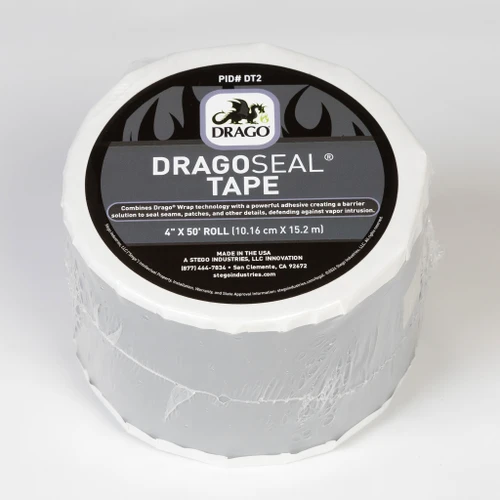
Drago Wrap membranes are installed beneath the building slab to create a continuous, monolithic barrier. Membrane sections are properly overlapped and sealed, with penetrations, perimeters, foundations, terminations, transitions, and damaged areas detailed using compatible Drago accessory products. Installation should follow manufacturer instructions, project specifications, approved construction details, and applicable industry or regulatory requirements.
The cost of a Drago Wrap membrane system varies depending on the membrane selected, project size, location, building design, site conditions, installation complexity, construction schedule, detailing requirements, accessories, verification requirements, and other project-specific factors. Stego Industries can help project teams evaluate appropriate Drago Wrap membrane options and connect them with experienced Certified Installers who can provide project-specific planning and installation estimates.